My Top Five Favourite Comic Books: #4 ‘Eustace’ by S. J. Harris

Image

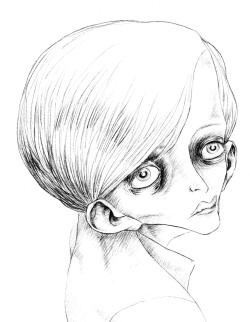
Eustace is new this year, and it’s astonishingly good. Like Shakespeare’s Measure for Measure, it’s a work of two halves, although with Eustace I’m afraid both halves are tragic: there’s no happy ending here, in spite of the dramatic turn of events when Uncle Lucien (‘Lucy’) shows up almost exactly half-way through.

The first half of the book is really quite remarkable. Our narrator is Eustace, a terminally ill eight-year-old boy who is confined to his bed. On the face of it, there’s not much scope for narrativity given that Eustace is so ill he can barely move and his room is bare and unfurnished; however, Eustace manages to be an entertaining narrator nevertheless. We learn about his parents’ appalling neglect, his mother’s unhealthy fixation on Frank, her eldest son, Eustace’s dread of physical contact with his aunties, the ghastliness of his boisterous cousins, his ineffectual uncles, and the unsavoury doctor, who, despite all evidence to the contrary, believes Eustace to be a time-wasting malingerer. Eustace addresses the reader directly and it becomes clear in the second half of the book that these theatrical ‘asides’ are, in fact, clearly audible to the others present, and Eustace’s guests can’t understand why the boy is chattering away to himself all the time. The reader is cast in the role of ‘invisible stranger’ rather than ‘invisible friend’ (Eustace won’t allow invisible friends in the house anymore), and we are at first rather taken aback to learn that Eustace’s words are overheard by the characters. This is one of the ways in which Harris goes about breaking the fourth wall, as it were. There’s another example of this sort of thing on page 21 when Eustace tells us that Frank is in the army, but the image of Frank changes in the following frame when Eustace realises that the uniform Frank is wearing as he stands next to the bed is probably outdated. The story constantly draws attention to itself, and we are repeatedly reminded that none of this is real. Free and imaginative use is made of space and frames: for example, parts of the picture fade or disappear, often leaving Eustace stranded and floating in white space.

Image

The pictures fade to blankness when Eustace asks the reader to leave so he can use the chamber pot. The effect of all this is twofold: first, the reader is given a role in the story and is actually addressed as a presence in the room, and second, one is led to ask just how much of what we see is actually just a figment of Eustace’s imagination. A small boy confined to bed has to find some way of passing the time, after all. There is a scene in which the aunties actually start devouring Eustace’s cousins, all of which is clearly in the small boy’s mind: he imagines on page 38 that when his aunties tell him he has a label sticking out, they are in reality pulling at his clothes in order to shove a bayleaf down his back before running to the kitchen to switch the oven on.

 Image

And there’s something in the artwork I don’t think I’ve ever seen before – a smaller frame taking up a fraction of the larger frame to suggest not just movement, but a passing moment. On page 143, Eustace begins to address his father, but gives it up as a bad job, and the reader sees in one panel both Eustace’s abortive attempt to get his father’s attention and his angry, despairing expression a second or two later. It’s very effective, and in this instance, very moving.

Eustace’s days are enlivened by the visits of his aunties, one of whom has a splendid left hook and manages to give Eustace a lovely shiner with a blow meant for one of the other aunties. Aunty Nin’s catty remark (‘in that hat, which you wear so relentlessly, my dear, you remind me of one of the four horsemen of the apocalypse – and his horse’) is what sparks the row, and Nin’s retaliatory left hook goes wide of the mark and knocks poor Eustace out. A steak is brought for his eye, and in the pages following, the reader travels with Eustace through his nightmare landscape of the unconscious. Pages 102-105 are the most beautiful and the most disturbing in the whole book. Eustace, still in his pyjamas, wanders through a bleak landscape until he comes across a horribly wounded man tied to a tree with barbed wire. The man has no legs and his blood flows freely. The man is posed as a Christ figure, or perhaps St Sebastian, but he is identified as Frank when men in uniform rumble past in their tanks shouting ‘Three cheers for Frank!’ The family resemblance between Eustace and Frank is so strong that Eustace could almost be looking at himself in the figure tied to the tree. He drives away two crows who are eating what’s left of Frank’s legs and sobs, ‘Oh Frank, what have they done to you?’ and Frank responds with ‘Eustace? That you, old thing?’ Eustace attempts to caress Frank’s poor face, but as he does so, Frank’s mouth melts and in the following frames, his entire body liquefies. Eustace wakes up with a start to find a bloody steak on his face.

Disturbing though this is, the second half of the book demands a stronger stomach still. Uncle Lucy is wanted by the police for crimes of fraud and embezzlement and is ‘lying doggo’ until he can find a way out of London. Uncle Lucy sets up camp in Eustace’s room, and is soon joined by a succession of criminals, whores, pimps and many other characters from London’s underworld. In fact, Eustace’s bedroom becomes The Place To Be, but there is a catch: Uncle Lucy won’t allow anyone to leave in case the police are alerted to his whereabouts. Now everyone is a prisoner in Eustace’s room, and this includes the reader, being, as we are, one of Eustace’s inventions. Eustace was imprisoned before by his illness, but now he is under threat of physical violence if he makes any attempt to leave. All this is very odd and the reader is left wondering whether any of it can be real, but, unreliable narrator though he is, even Eustace couldn’t make this up: an eight-year-old boy as sheltered as Eustace could not possibly be able to imagine the goings-on of the second half of the book. In fact, he quite clearly doesn’t understand what he sees. The reader knows a great deal more than the child-narrator and reads events very differently: we know what Frank and Peter are doing under the bed, and what Uncle Lucy and Oubliette are doing in the wardrobe, but Eustace doesn’t. We read the pictures differently and Eustace is no longer in control, as he was when he re-imagined Frank’s uniform.
Image

The book ends with a newspaper report detailing how the events of the book play themselves out, but this tongue-in-cheek report is obviously not designed to fool the reader into believing that anything narrated here actually took place. Nevertheless, it adds yet another inscrutable layer to this surreal tale. I can’t recommend it highly enough…but be warned: the second half in particular is graphic in every sense.

My Top Five Favourite Comic Books: #5 ‘Gemma Bovery’ by Posy Simmonds

Image

Now, I love lists as much as the next person, so what better way to while away a few of these darker autumn evenings than by writing about one of my favourite things: comic books. Over the next few posts, I’ll be giving you my Top Five plus some extra information about a couple of Also-Rans and an Outsider. I’ll try to avoid spoilers as far as I can, but please be warned that there may be a few here and there. First, straight in at number five is Gemma Bovery by Posy Simmonds.

I’m a big fan of Simmonds’s other work – Tamara Drewe, Mrs Weber, and so on – but Gemma Bovery gets top five placing for the fascinating conflict generated between the various narrators and narrative levels, and the sheer beauty of the delicate pencil and pen-and-ink drawings. It’s a story told in words and pictures rather than in strips made up of panels, but it’s seamlessly put together so there’s no sensation of being jolted about between text and image: the eye of the reader always knows where to go next. I have a penchant for beautifully executed plain pencil drawings, and Simmonds’s artwork here is truly stunning.

Image

Our narrator is the baker, Joubert, who tells us his side of the story and also reveals to us the contents of Gemma’s diaries which he has stolen from her husband Charlie, so we hear Gemma’s voice weaving in and out of Joubert’s narrative. Joubert, who I think is supposed to be a sort of textually reincarnated Gustave-Flaubert-controlling-author figure, becomes convinced that Flaubert’s novel Madame Bovary has some kind of sinister power over the lives of his new neighbours, Gemma and Charlie Bovery, and indeed there are many parallels between the two texts. The more obvious similarities at story level are pointed out for the reader through Joubert, but there are possibly many more parallels at narrative or discourse level that I’ve missed, having not read Madame Bovary for over twenty years. Madame Bovary was considered obscene and Flaubert was taken to court in January 1857, but was acquitted when it was successfully demonstrated that his use of free indirect discourse meant that what appears on the surface to be Flaubert’s words are in fact Emma’s words reported through the narrator. Flaubert could not, therefore, be held responsible for the sentiments expressed.

I’ve mentioned Joubert’s story and Gemma’s diaries, but it seems likely, given the number of scenes that Joubert does not witness directly, that there is a third narrator at work here, linking and fleshing out the two main narratives. There are other texts and voices present too: mainly letters, but bills and faxes also feature alongside examples of Gemma’s artwork, thus the whole story is a complex mesh of competing narratives all held together under the over-arching umbrella of Flaubert’s novel, which repeatedly surfaces in this new and autonomous text. There is a nice distance too between Joubert’s self-deluding narrative and what the reader can pick up either between the lines or from the images: information and impressions which work either to undermine or to flatly contradict Joubert’s narrative. There’s a good example on page 59 when Joubert tells us that he thinks Gemma’s reinvention of herself as The Blonde is a tired cliché; he says he finds her ‘quite without allure’, but the reader can see him in the picture, positively drooling behind his baker’s counter with his eyes popping out of his head. Joubert is an unreliable narrator because he chooses to fool himself and the reader recognises a long time before he does the reality behind Joubert’s rampant voyeurism: he has fallen in love – or, more likely, lust – with Gemma and wishes to replace Hervé (and later Patrick) as Gemma’s lover.

Image

Simmonds has added to the original story of a bored housewife the thrill of a whodunnit, employing the techniques of unreliable narration and repetition used by writers of detective fiction. When the story begins, Gemma is already dead and both Charlie and Joubert are mourning her. Joubert is convinced that Gemma’s death was inevitable because she bore almost the same name as Flaubert’s ill-fated heroine, and Charlie’s subsequent grief-stricken decline seems to indicate that he too will follow in the footsteps of his Flaubertian namesake. There is some mystery surrounding Gemma’s death, however: when Charlie arrives to beg for help on the day Gemma dies, he bears the marks of a struggle – so what really happened? The narrators piece the story together for us bit by bit, but the reader has to balance what s/he is being told against who is doing the telling.

In fact, all three narrators are in some sense unreliable: Joubert because he is self-deluding; Gemma because she is self-absorbed and self-obsessed; the implied narrator behind the ‘camera angles’ of each drawing because the chosen angle excludes all others and thus renders this narrative as selective as the other two. It could be argued that Gemma’s narrative is the most reliable of the three because it is delivered posthumously from her diaries, and diarists are not writing for an audience so tend not to tell fibs. Although diaries are not usually intended for public consumption, writing them is still a selective process because one does self-edit, whether consciously or not. (As a personal aside, I burned seven or eight years’ worth of my own diaries: on re-reading them when I was older and wiser, I didn’t like the self I’d unwittingly revealed in those naïve pages and knew that it would make me feel better if I just chucked them on the bonfire.)

Image

The main character in both books – Gemma in Gemma Bovery and Emma in Madame Bovary – is an impossibly irritating woman, because both women are fantasists and have fed their imaginations on a diet of rubbish literature, poisoning their minds against the reality with which they are faced. Emma reads trashy romantic fiction and she metaphorically regurgitates the literary poison she has swallowed after her death, when black bile pours from her mouth as her body is being prepared for burial. Gemma, on the other hand, reads glossy magazines, and has done ever since she was allowed to peruse such publications in the waiting room of her father’s dental surgery when she was a little girl. Gemma learns of Patrick and Pandora’s marriage from one of these magazines, a bitter moment for her: what she sees is the life she had imagined for herself, after all. But Patrick and Pandora’s marriage doesn’t work either, and the reader realises what Gemma doesn’t – that life as portrayed in the glossies is nothing but an elaborate fake. Gemma, meanwhile, continues to build her castles in the air, as depicted on page 70 in a full-page illustration with explanatory text. (Spoiler: Gemma herself chokes to death on a piece of Joubert’s bread. She too, like her literary predecessor, cannot contain what she has swallowed, either in a realistic or a metaphorical sense. And on another level, G/Emma is once again killed off by Flaubert/Joubert).

It quickly becomes quite clear to the reader of both Flaubert and Simmonds’s text that G/Emma will never be satisfied with what she’s got. And G/Emma is not the only annoying one. Simmonds gives us a whole line-up of fabulously repellent characters: the ghastly Rankins, the awful Judi and her revolting spoilt children, the spineless Hervé and his snobbish, domineering mother, and finally, the borderline sex-pest Joubert.

It’s all great stuff, and it’s my Number Five.

Like a hell-broth boil and bubble

Truth and the telling of stories: ‘The Twins’

This post has been removed because the content is now available in book form with many other essays and blog posts previously available on this site. The book is titled Ungrammaticalities: Linguistic Literary Criticism from ‘The Battle of Maldon’ to Muriel Spark, and it is available for purchase HERE from August 2024.

Please see this page for the cover art and table of contents.

‘Excluding the lumpen hoi polloi’: The auto/biographies of Muriel Spark

‘Excluding the lumpen hoi polloi’: The auto/biographies of Muriel Spark

This post has been removed because the content is now available in book form with many other essays and blog posts previously available on this site. The book is titled Ungrammaticalities: Linguistic Literary Criticism from ‘The Battle of Maldon’ to Muriel Spark, and it is available for purchase HERE from August 2024.

Please see this page for the cover art and table of contents.

Who’s pulling the strings?

Image

At the beginning of Muriel Spark’s Loitering With Intent, Fleur Talbot sits in a graveyard writing a poem. Critics have leapt on this with glee, crying out that that’s probably what Muriel Spark herself did! Well, possibly. Big deal. I mean, who hasn’t sat in a graveyard writing a tortured poem? That’s just what every teenager does, isn’t it? And twenty-odd years ago I’m afraid I did exactly this (although thankfully the poem is now lost) and I was listening to Toyah Willcox’s Anthem album as I did so.

I’ve had the idea for this post bubbling on the hob for a couple of weeks now, ever since I re-discovered that particular album on Spotify. I last saw Toyah on the telly lisping her way through a deodorant ad and I’d forgotten all about her, but having been reminded of that purple cassette tape I cherished all those years ago, I can see now, from a distance of more than two decades, exactly why it was that her music was so captivating to me as a moody Don’t-Know-Who-I-Want-To-Be teenager. Before going any further, I should point out that I’m writing as someone who knows very little about punk rock – if that is indeed what Toyah wrote – but I was very good at being a gauche and maladroit teenager and I think I might be onto something here.

Image

Leaving aside the more obvious appeal of sentiments such as ‘So what if I dye my hair? I’ve still got a brain, I’m there and I’m gonna be me’ from I Want To Be Free, Toyah’s lyrics often conjure up a nightmarish landscape of hostile bleakness, peopled with fantastic, monstrous creatures. And of course, this sort of landscape is exactly the kind of godforsaken place you inhabit in your mind as a teenager, for year after year after yet-another-wretched year. My favourite song was always Marionette, which tells of a land in which a marionette pulls the strings, rather than it being the other way around.

Image

Marionettes are creepy enough, frankly.

Image

See what I mean? And this particular marionette delights in the misery of her war-torn subjects. The lyrics couple images of subjection and pain with…well, images of coupling. The marionette is a queen bee, serviced by her knaves and pawns so she can bring forth hordes of offspring who sing in the cathedral beneath a swinging pendulum – most likely incense, but in context, I can’t help but think of Edgar Allan Poe’s The Pit and The Pendulum. Of course, it’s probably all metaphorical anyway, but as a teenager, you’re far more likely to take everything literally and to imagine that the land really is ruled by a power-crazed, sex-obsessed puppet, bent on destroying your will and taking control of your life. Power and control are major themes in many of Toyah’s songs, and I enacted my own personal feeble rebellion at the injunction to be home in time for dinner by sitting in graveyards, writing rubbish poetry and listening to Marionette – the one who was once controlled is now the controller. Well, far better I suppose, to be the marionette than the reaper, who laughs before choking and crying.

Image

The Anthem album cover (below) depicts the teenage-psyche-nightmare-place with the central figure, Toyah herself, striding fearlessly across this inhospitable wasteland. She is distant, powerful, beautiful, and it looks as if she’s holding the head of someone who got on her nerves once too often:

Image

And of course, this is the figure you want to be. Toyah was wildly creative. She had massive hair. She used naughty words: ‘whore’ crops up quite a lot, and I can remember the thrill of hearing Toyah shout ‘Silence little bitch!’ in Elocution Lesson (you have to bear in mind that this was in the days when every other word in The Guardian wasn’t ‘fuck’ or ‘onanism’). And she’s only 11 years younger than my parents! – but I would never have believed that when I was 16. Toyah was everything I wanted to be and wasn’t. She’s even got wings in this picture here. But according to the extensive Wikipedia entry, Toyah was born something of a monster herself, ‘with a twisted spine, clawed feet, a clubbed right foot, one leg two inches shorter than the other and no hip sockets’, and of course, that lisp as well. Toyah went through a great deal of real physical suffering to become the astonishingly attractive person that she still is. She has never been particularly interested in either men or women as sexual partners, but she is married to a man whom she describes as her soulmate. She has been sterilised – pregnancy and childbirth would have been dangerous for her, given her past medical history. So Toyah has always been ‘outside’, in a sense, alien to everything, accountable to nothing, including her own biology. She really did cut all those strings.

Image

Toyah Willcox’s official website can be found here.