Speech and Thought Representation in Terry Pratchett’s ‘Going Postal’

Speech and Thought Representation in Terry Pratchett’s ‘Going Postal’

This post has been removed because the content is now available in book form with many other essays and blog posts previously available on this site. The book is titled Ungrammaticalities: Linguistic Literary Criticism from ‘The Battle of Maldon’ to Muriel Spark, and it is available for purchase HERE from August 2024.

Please see this page for the cover art and table of contents.

The Murder of Merle Coverdale

The Murder of Merle Coverdale

This post has been removed because the content is now available in book form with many other essays and blog posts previously available on this site. The book is titled Ungrammaticalities: Linguistic Literary Criticism from ‘The Battle of Maldon’ to Muriel Spark, and it is available for purchase HERE from August 2024.

Please see this page for the cover art and table of contents.

Through a glass, darkly: Muriel Spark’s ‘The Dark Glasses’ (1961)

Through a glass, darkly: Muriel Spark’s ‘The Dark Glasses’ (1961)

This post has been removed because the content is now available in book form with many other essays and blog posts previously available on this site. The book is titled Ungrammaticalities: Linguistic Literary Criticism from ‘The Battle of Maldon’ to Muriel Spark, and it is available for purchase HERE from August 2024.

Please see this page for the cover art and table of contents.

My Top Five Favourite Comic Books, an Outsider: ‘Dotter of Her Father’s Eyes’ by Mary and Bryan Talbot

Image

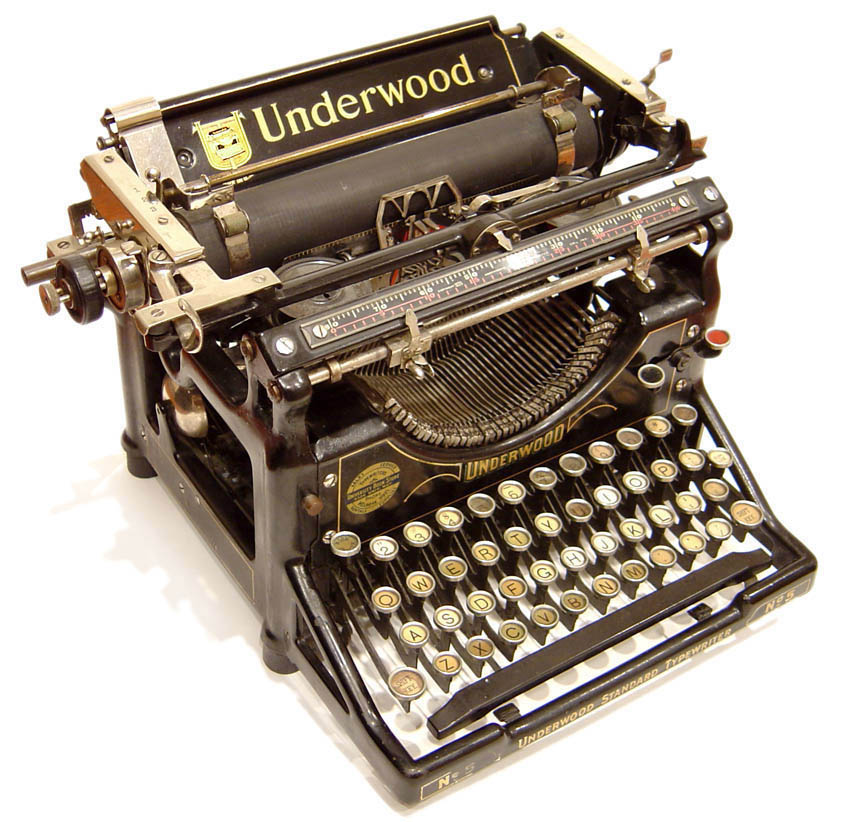
Today has been a rotten day, to be honest. When the metaphorical whistle blew on my day job, I waded across the sludgy campus to spend the afternoon in the library, where long-suffering library users like me who actually want to Do Some Work huddle hopelessly in the silent study rooms on level five, desperately wishing that other less considerate library users could at least make some effort to grasp the idea of silent study. ‘Silent’ means ‘shut up’. Whispered conversations are not okay, because we can all hear you, and if two people are whispering in an otherwise silent room, it’s very distracting. Shut. Up. No giggling, no whispering, no eating crisps or other noisy and/or smelly snacks, no noisy breathing, no listening to some ghastly whining female vocalist at full volume on your iNoisyToy, and if you must type rather than use a pen, please try to Do It Quietly. No need to hammer at the keyboard. You’re not using an Underwood.

Image

The loud stage-whispered conversations in the library this afternoon would not be swayed by any amount of shushing from myself, so I moved to the other ‘silent’ study room where unfortunately everyone seemed to be suffering from pleurisy. At this point I gave up and came home, and now I’m in the mood to be spiteful so it’s the perfect time to write a blog post about this book which, quite frankly, was never going to make it into the magical Top Five.

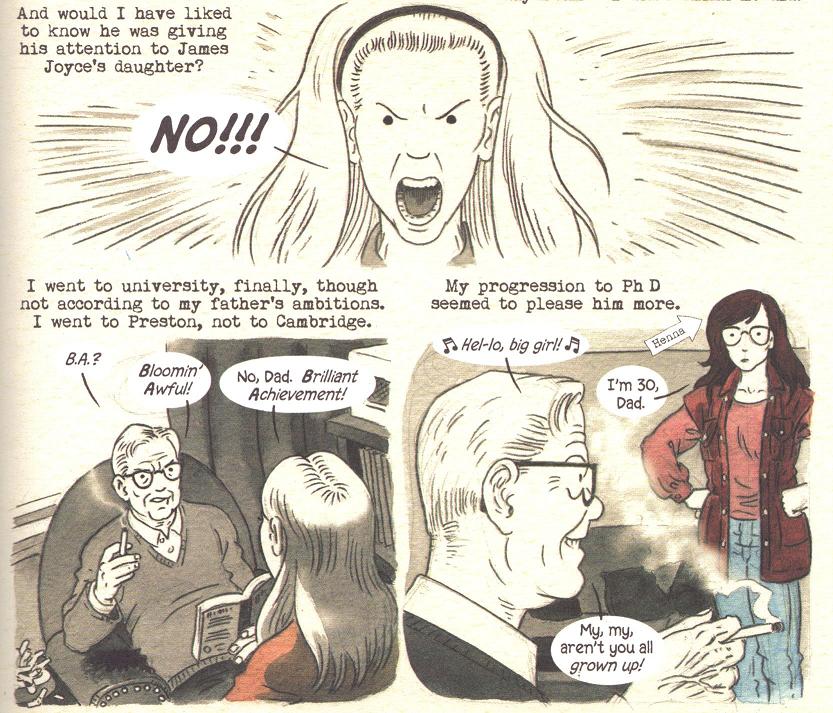
To be fair, I should make it clear at the outset that, as I’ve mentioned elsewhere, I’m not much of a one for biography. It’s just not my cup of tea. I simply find it rather dull, and biography in graphic novel form is for some reason even more dull. It just seems to go nowhere. David B’s Epileptic is a valuable exception, but Harvey Pekar’s The Quitter bored me rigid. Anyhoo, there was a bit of a to-do about Dotter because it was shortlisted for the 2012 Costa Biography Award, so I thought I’d give it a whirl. In a nutshell, Dotter is written by husband and wife team Mary and Bryan Talbot: she did the words, he did the pictures. The book tells of two dysfunctional father-daughter relationships: the story of the author Mary and her ‘cold mad feary father’, an eminent Joycean scholar, is told alongside that of Lucia Joyce, daughter of the famous James, whose promising career as a dancer is cut tragically short, with her parents being in no small way to blame for this.

Image

At first it seemed as if all my preconceptions and worst imaginings concerning graphic biographies were going to be confirmed. The first 25 pages of Dotter are pretty awful: the exposition necessary to orientate the reader is, on the whole, clumsily executed, but I quite like the ‘typed’ narrative voice – it has an appropriate kind of nineteen-fifties feel to it. However, I hate the wifely interjections: ‘NB: My mother wouldn’t have been seen dead in a frilly apron’, and again on page 18, ‘NB: Bryan’s wrong again. In my school boys were seated on one side of the classroom, the girls on the other’. Well, why didn’t you tell Bryan this before the book went to press, Mary? You’re married, aren’t you? I assume this means you live in the same house and spend a fair bit of time together, so you could have told him, couldn’t you, instead of inflicting this rubbish on us? And if the cutesey interjections aren’t bad enough, the clunky dialogue on page 15 is just excruciating:

(Scene: university canteen)

MARY: Yeah, well, when I discovered Joyce had a daughter, I was curious. My parents were named Nora and Jim too!

RANDOM COLLEAGUE 1: No way!

RANDOM COLLEAGUE 2: So you’re finding parallels?

MARY: I bloody hope not! She spent most of her life in mental institutions.

RANDOM COLLEAGUE 2: Just like this place, then!

RANDOM COLLEAGUE 1: And you fit in so well!

Please, by all the gods, spare me. Spare me from other people’s wackiness.

Image

The book takes off though, once Lucia’s narrative begins. Three different colour schemes help keep the reader grounded: full colour for the present day, sepia for Mary’s childhood, and muted blues for Lucia’s story, which, chronologically-speaking, is the oldest narrative; so we move therefore from a sort of black and white into sepia and finally into full colour, as if looking at a century’s worth of old photographs. Splashes of colour dribble into the sepia colour-scheme, and these splashes become increasingly dominant as Mary and Bryan’s history begins to catch up with the present time. This method of selective colouring is also employed to achieve other, striking effects: for example, the streaks of red blood following the birth of Mary and Bryan’s first son are foregrounded against the still predominantly sepia background.

Image

The two storylines share similar themes of parental abuse and neglect, but it seems to me self-indulgent to parallel Mary Talbot’s sufferings with those of Lucia Joyce. After all, Mary had raised two children and gained a PhD by the time she was thirty and it is difficult to believe this would have been possible without some measure of parental support. Poor Lucia Joyce had made a promising beginning as a dancer, but was denied every opportunity to further this career and was eventually committed to a mental institution by her own brother after a nasty fight with her appallingly vicious mother. In the parallel narrative, Mary Talbot’s father seems to have been a nasty piece of work in some respects, yes, but Mary isn’t seen to end her days in the loony bin.

Image

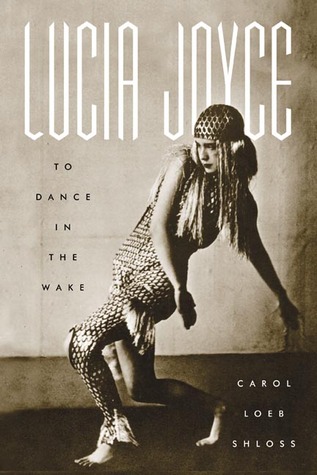
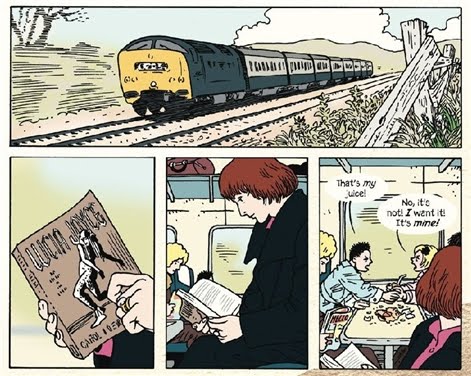
In fact, I think on the whole I’d have preferred to read the biography of Lucia that we see Mary reading at the beginning of Dotter.

Image

Just two more points before I wrap this one up. The artwork is lovely and I’ve always liked Bryan Talbot’s stuff – his style is clear and clean, but astonishingly expressive nonetheless. He’s also the author of another very successful comic book, Alice in Sunderland. Finally, it’s interesting to compare the depiction of riot scenes caused by the Paris debut of George Antheil with the rendering of the same scenes in Catel & Bocquet’s Kiki de Montparnasse. Yes, I know the latter is biography and I’m not supposed to like it, but it’s also a rollicking story with boobs, bums and plenty of dancing and drinking, so it’s alright with me.

My Top Five Favourite Comic Books, an Also-Ran: Joff Winterhart’s ‘Days of the Bagnold Summer’

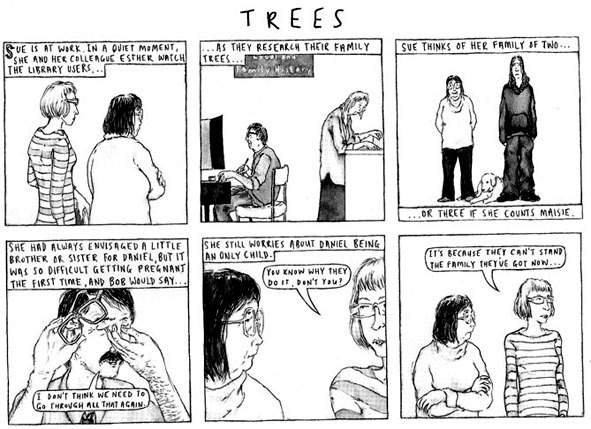
ImageFifteen-year-old Daniel’s trip to Florida to visit his absent father and the stepmother who ‘would rather be seen as a friend’ is cancelled owing to the latter’s advanced pregnancy, and as a result Daniel and his mum Sue face a long six weeks together over the school summer holidays. Days of the Bagnold Summer is a narrative structured by the weeks of that summer, one week per chapter. Each page features a subtitle or heading which provides a theme for the panels to follow, some themes more abstract than others, and the drawings are mostly of human figures executed in a pencil and ink wash. A narrator is ever-present in the often lengthy captions, providing the reader with an omniscient insight into the minds of mother and son as the long weeks pass slowly by.

The six-week block of time that is the Bagnold summer is framed by a forthcoming wedding and the need to buy Daniel some black shoes to look smart for it. The story opens with yet another failed shopping expedition and ends with Sue and Daniel walking into the distance, growing smaller and smaller inside successive frames as they make their way towards the wedding venue. Daniel wears black trainers instead of shoes, having finally worn Sue down.

Image

As far as the actual story goes, that’s pretty much it. But any idea of ‘plot’ is, of course, beside the point. The focus of Winterhart’s narrative is the relationship between Daniel and Sue, the relentless tedium of the summer holidays when one is young, how dreadful it is to be a teenager and how difficult to be the single parent of a teenager. Winterhart’s achievement is to generate an equal amount of sympathy in the reader for both Sue and Daniel without tipping over into sentimentality; even the repulsive Ky, Daniel’s bullying best friend, is temporarily the object of the reader’s pity when he responds badly to Daniel’s having been accepted into a local band. Ky is momentarily wrong-footed and we get a glimpse of his fragility in his short-lived ‘muted reaction’.

Sue battles to understand her teenage son and tries to establish a connection with him by mentally recreating her own teenage years. She remembers those years as ‘an incredibly difficult and lonely time’. Daniel himself is a typical fifteen-year-old boy: he listens to heavy metal and fantasises about being the lead singer in a metal band; he enjoys drawing, but his taste is limited to pictures of axes, corpses and skulls. He is revolting in the way that teenage boys are: he is scruffy, he never washes his hair, he drinks barbecue sauce straight from the bottle when Sue isn’t around. He is also inconsiderate and lazy, but only in an average-teenager kind of way and the reader knows that Daniel will improve with age. And Daniel’s thoughtless selfishness is matched by Sue’s ability to come up with excruciatingly embarrassing comments (‘Aftershave…make you smell a bit sexy for the girls’). The relationship between mother and son at this most difficult time of Daniel’s development is characterised by a tension which increases until it explodes into the inevitable row – pretty normal teenager-parent stuff. The most touching moments in the narrative are those infrequent times when Sue and Daniel actively understand each other, such as when Sue describes Ky’s mother as being a bit ‘much’, to which Daniel responds positively, actually looking at his mother for once and agreeing with a little smile and a ‘Yeah’.

Image

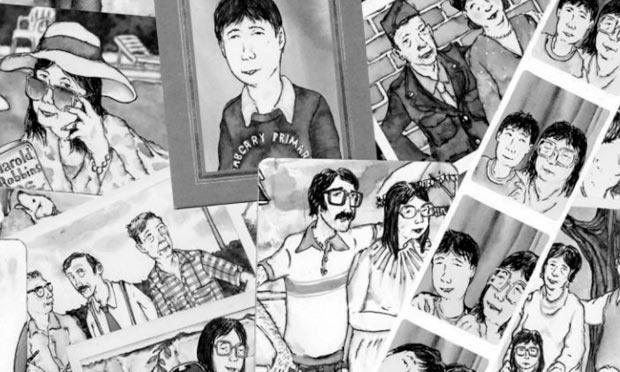
Parallels between mother and son are drawn throughout – a disinclination to wear anything other than a black hoodie or a shapeless sweater, a desire to be admired as a musician, an innate inability to join in, a bully for a best friend – and the reader is left with a keen awareness of inherited traits travelling down through generations. Family history is invoked through the use of photographs and other memorabilia. Absent fathers provide another point of connection between the various characters: Sue’s father was a GI who left his wife and daughter to return to the country of his birth; Daniel’s father left his mother to set up home with another in the US; Ky’s likeable but flaky mother, like Sue, is struggling to bring up a teenage son on her own.

A gentle humour pervades the book which relieves the sadness of it and Winterhart almost never allows the narrative to become mawkish: the only false note is the overly-melodramatic story of Sue’s short-lived relationship with a strange, troubled boy when she herself was Daniel’s age. This implausible episode in Sue’s past of armed robbery and subsequent suicide feels out of place in an otherwise humdrum event-free world. Nevertheless, I like this book very much. And with every re-reading, it never fails to make me extremely glad that my teenage years are now a long, long way behind me.