Three Spark Novels Covered

We all know we’re not supposed to judge a book by its cover, and we all do it nevertheless. Of course we do. So much so, in fact, that the cover design is now recognised as part of the narratology of a book: the ‘layout and illustration of a book’s cover and the design of its title page strongly influence consumer behaviour when the reader is able to choose from a number of editions from a range of newly published books’ (Monika Fludernik, An Introduction to Narratology, p. 19). The picture on the cover begins to draw us into the text before we’ve glanced at the first page, and in some cases can even contain spoilers, or can provide a reading, or interpretation, of the text that will influence the reader right from the start.

Personally speaking, I avoided Terry Pratchett novels for years because of those awful Josh Kirby covers. Be-thonged maidens with unfeasibly large boobs? No thanks. Kirby’s illustrations gave me the impression that the novels would be representative of the fantasy genre at its most ridiculous, when in fact this is not true at all. A friend urged me to ignore the covers and give Pratchett a try, and when I did, I enjoyed his Discworld books hugely and read them all one after the other. If it hadn’t been for those ghastly covers, I would have read them years ago. My apologies to those who like Kirby’s work – I know there are many who do – but I’m firmly in the Paul Kidby camp.

Anyway, this term I’ve been writing about Muriel Spark’s The Bachelors, The Ballad of Peckham Rye and The Public Image, and I thought I’d put together a little blog about the covers for these books. The Bachelors was first published in 1960, and its central figure is a spiritualist medium by the name of Patrick Seton. Seton is a criminal – of that there is no doubt – but there is textual evidence to suggest that his powers as a medium may be genuine, especially in the episode concerning Dr Lyte. Most of the evidence points to Seton being a fake, but he seems to be genuinely unaware of what it was that he said to Dr Lyte when in his trance. Of course, you never really know where you are with Spark, and her narrators often keep the reader guessing just for the hell of it – you’re never told for sure whether Seton is able to contact the spirit world or not. Let’s have a look at the covers.

Image

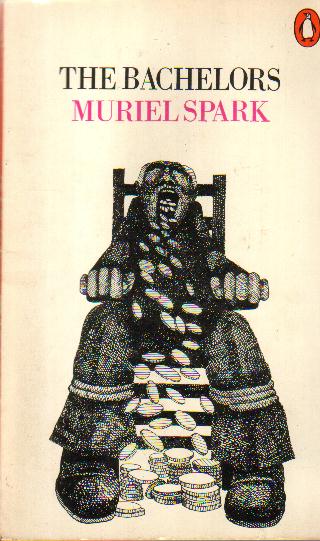
(left) This is Patrick during a séance, mouth open, delivering messages from the other side, with his audience gathered around him. This next one, however (below), goes beyond simple illustration and provides the reader with an interpretation:
Image


Here (right) we have Patrick, tied to his chair as he is during his trances, but this time, coins, not words, are cascading from his open mouth. The impression given is that Patrick makes money from his spiritualist performances, so the further implication is that Patrick is not genuine. This reading will colour the reader’s perception of the text right from the start.


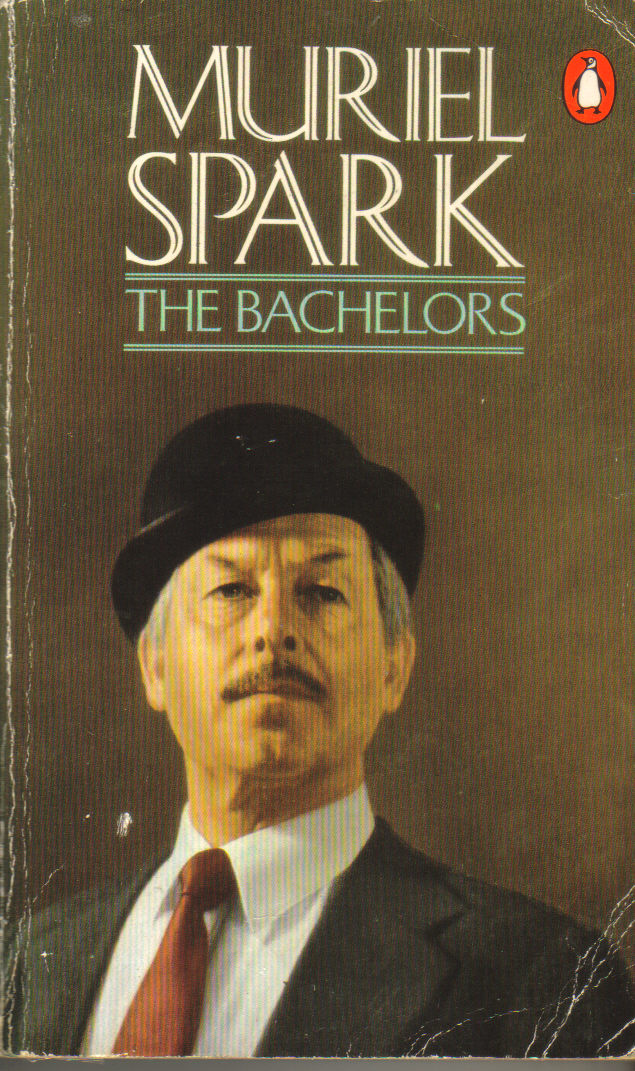
The final cover for this book, however, is more likely to simply confuse the reader:
Image

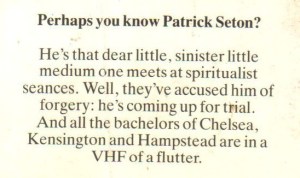
(left) I mean – what’s this about? It’s just a man of a certain age in a suit and a hat. It’s as if someone just searched for ‘bachelor’ in the Clip Art library and came up with this one. Not wrong, because the book is entitled The Bachelors, but not really right either. And the blurb on the back cover is weird too (see below):
Bachelors_back cover


Just who is supposed to be talking here? ‘He’s that dear little, sinister little medium’? Is it supposed to be the voice of one of the members of the Wider Infinity, Patrick’s spiritualist group? I suppose it could be, but clearly the last sentence is a narratorial voice rather than the voice of a character, which doesn’t help matters and makes the whole thing look a bit cock-eyed and cobbled together at the last minute. And what’s a ‘VHF of a flutter’ when it’s at home? Really, this is rubbish.

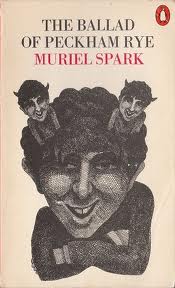
On to the next novel, The Ballad of Peckham Rye, also published in 1960. This story features a character called Dougal Douglas (or Douglas Dougal), who arrives in Peckham Rye and causes mayhem before departing. He has two lumps on his head which he claims to be the remains of horns removed by a plastic surgeon, but we don’t have to believe this. The designer of this cover, however, wants the novel’s readers to believe that Dougal really is an instrument of the Devil (below left):
Image

Here Dougal’s ‘horns’ are two miniature versions of himself, each with their own set of horns – which in turn will have horns, and so on and so on. Dougal is looking at us and grinning, as he is here (below right):

Image

The grin is not so obvious, but can be inferred perhaps from the raised eyebrow and cheek muscle. This cover goes some way towards depicting the canteen scene in the novel, in which Dougal attracts a great deal of female attention by bursting into tears. A third cover does not depict Dougal at all, but focuses on Peckham itself:

Image

Here, Peckham Rye has been made to look a bit like Las Vegas – which it doesn’t – but the artist has picked up on the dancing. There’s an awful lot of dancing in this novel, and of course the Devil loves to dance! But dancing is part of social behaviour and it comes with a whole set of rules and regulations of its own, to which the Peckham inhabitants add their own little rituals. In Peckham Rye, dancing is never very far from fighting (and vice versa, in fact), both of which activities are undertaken by savage and civilised societies. And dancing, of course, is so often a prelude to sex. William Boyd argues that this is a novel about sex in his perceptive introduction, and I’m inclined to agree with him. Sex, fighting and dancing. The inhabitants of Peckham Rye don’t really need a devilish figure running around to cause trouble, because it’s all happening already. Dougal, for all his funny ways, is merely a catalyst.

So now we come to my last novel for today, The Public Image, published later than the other two, in 1968. This story is about a second-rate actress, who has somehow become very successful, fighting to save her public image when her husband commits suicide.

Image

The first cover (left) shows a diminutive woman struggling under the weight of a huge star bearing a wide toothy grin. The woman herself is frowning fiercely: she looks off-balance and is obviously unhappy with her position. This picture always reminds me of Atlas trying to bear the weight of the world on his shoulders, but Atlas, of course, had no choice. The idea that the public image is something from which the actress would like to escape is another example of a reading that is given to the reader in the cover image. A second cover looks like this (below right):

Image

It’s very similar in some ways: a large smiling face, eyes hidden by sunglasses as is so often the case, and the shell appears in Frederick’s suicide note to Annabel: ‘You are a beautiful shell, like something washed up on the sea-shore, a collector’s item, perfectly formed, a pearly shell – but empty, devoid of the life it once held.’ (p. 92). The shell image reappears at the end, but I can’t say more without spoiling it. Finally, this third cover is very different:
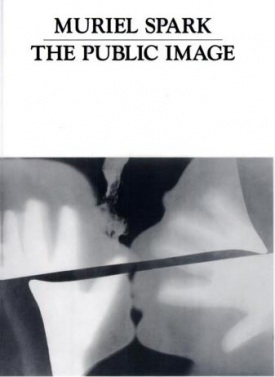
Image

This image (left) focuses not on the public image, but on the ruptured marriage – an image in negative of two people kissing is torn across the centre. This cover design incorporates Frederick’s role in Annabel’s public image, which the other two do not.

I’ll end with an image of Muriel Spark herself (below). Isn’t it fabulous?

Image

Marinated and battered administrator with chips and mushy peas

I’ve been reading Peter Stockwell’s Cognitive Poetics, and one of the suggested exercises was to write your life story as a cookery recipe, which sounded like fun, so I’ve given it a go. One thing I noticed straight away as soon as I started to write was just how many very violent verbs there are in cookery books: batter, smash, grind, pound, and so on. It occurs to me that it would be possible to write an excellent murder scene in the form of a recipe. I might try that next, using the scene in Spark’s The Ballad of Peckham Rye when Mr Druce murders poor Miss Coverdale of the long neck.

Here’s the life-story recipe. I’ve not included everything, because that would be tedious.

Marinated and battered administrator with chips and mushy peas

Ingredients:

  • Teenage angst
  • Various qualifications of different sizes
  • Cider
  • Work experience in varying degrees of awfulness
  • Several useless boyfriends
  • Two husbands
  • Sedatives
  • Counselling in measured amounts
  • A fistful of lovely friends
  • Chips
  • Mushy peas
  • Wine


Method:

Take a pear-shaped casserole dish and line with plenty of teenage angst. Turn the heat right up until the dish is red-hot, then add some of the smaller qualifications and mix well. Transfer to a university and soak in cider for three years. Spoon in another, larger qualification, turn the heat down and simmer in a solution of tepid retail experience until tender but not quite on the point of collapse. Toss into a large library then dunk in a publishing house. Sprinkle in a useless boyfriend along with another of the smaller qualifications and let the mixture bubble and froth until boiling point is reached. Pour into a marmite and remove to France. Let the mixture stand for a year, by the end of which time it will be coated in fat. At this point, return the mixture to the UK.

Batter with another useless boyfriend and then leave to stew in teaching for eight years, or until thoroughly browned off. During this stage of preparation, add the first husband. Stir until dissolved then remove the empty shell.

The mixture will now be very pale and flat, so keep adding sedatives and measured amounts of counselling until it begins to rise. Sweeten with lovely friends and allow to settle. After a month or two, warm the mixture in university administration. Drain and drop in the second husband. After three years, scrape away the remains of the husband’s parrot.

Season to taste. Serve with chips, mushy peas and as much wine as you can get down your neck without being hospitalised.

Book review: Mary McCarthy’s ‘The Group’

(Beware: *spoilers*)

I buy my books and most of my clothes from charity shops these days, and I picked up Mary McCarthy’s The Group from the Oxfam bookshop in Reading. It came complete with a handwritten letter, which I read with absolutely no compunction whatsoever and then used as a bookmark. The letter was written by a girl, using silly turquoise ink and a proliferation of exclamation marks, to thank the recipients for their wonderful house-warming party. McCarthy’s book was returned with the letter, because apparently the boyfriend of the letter-writer had already read it. The letter is interesting for the following reasons:

  • The writer doesn’t really have much to say, so keeps returning to the subject of the party: ‘I have told so many people about the party…all their parties sounded extremely dull in comparison’. But this is a thank-you letter after all, and it amply fulfils its function.
  • The writer has recently moved and now occupies a room in a terraced Edwardian house in Hereford. The house is not very sanitary because the two other occupants both have ME, so don’t do any cleaning. (The letter is dated 1995, and I remember ME being the debilitating condition du jour back then.)
  • The writer’s boyfriend is ‘very keen’ at the moment, which seems to be rather more than one can say for the writer. Boyfriend is shelling out his hard-earned to take Ms Turquoise Ink skiing in Cyprus in February, and she happily invites the recipients of the letter to come along too, presumably so as not to be left alone with Boyfriend.
  • The writer wants her own house and openly admits to being jealous of the house-warming pair.

It seems a very fitting letter to be supplied – albeit accidentally – with a copy of The Group. The writer is clearly quite young and still finding her feet. She needs to communicate her anxieties about the pushy boyfriend. She wants a home of her own. She doesn’t want to wash in a bathtub that has a ring of grease around it. All very similar to the protagonists of McCarthy’s story, who have just graduated from Vassar – which was still a women-only college in 1933, when the story begins – and they too are about to begin making their own way in the world.

The book tells you about the United States as it was back then. In following the group members as they set about building their lives, McCarthy explores various issues along the way: mental illness and its treatment (sadly very relevant at the time of putting this blog together), psychoanalysis, sex education, female sexuality and contraception, careers available to women at the time, financial hardship and how those less well-off were perceived, and parenthood. It’s quite a long book, and accustomed as I am to the shorter novels of Muriel Spark, it took me a little while to get used to the feel of a longer narrative again. I did enjoy it though, in spite of its story-that’s-not-really-a-story set-up: the book is actually a mixture of autobiographical material, fictional group biography, and socio-historical data mixed with political commentary. The end result is that I learnt quite a lot about the States in the pre-war years. An English equivalent in terms of the novel’s form is Margaret Drabble’s The Radiant Way, in which the central figures are a group of female Cambridge graduates: these young women are fictional vehicles through which the narrator can discuss and explore 1980s England.

In McCarthy’s novel, the rotten marriage of Kay Strong and Harald forms the larger framing narrative for the rest of the group’s stories: the book begins with one ceremony, the marriage, and ends with another, Kay’s funeral. Harald, unfortunately, turns out to be A Bad Lot, and he is the key figure in one of the most frightening episodes in the book: after a nasty domestic fight, he succeeds in persuading Kay that she needs to go to hospital for ‘a rest’ and, without her knowledge, he has her committed. If he hadn’t regretted his actions the next day, Kay might have been stuck in a mental institution for good.

Pokey Protheroe is fairly incidental to the novel. She is plump and stupid, and cushioned by wealth. Other members of the group get a chapter or two to themselves, but when it is Pokey’s turn, it is the family’s butler, Hatton, who takes centre stage.

Dottie Renfrew’s function in the novel is to show us that the Vassar girls have learned what they know of sex and sexuality from Kraft-Ebbing’s Psychopathia Sexualis, the saucier parts of which were written in Latin. Kraft-Ebbing died in 1902 and his theories had already been superseded by those of Sigmund Freud by the time of Kay’s marriage; in a later chapter, Norine Schmittlapp declares Freud also to be out of date (but we have to be slightly wary of Norine’s view, because a few paragraphs later she claims that Kay suffers from penis-envy). The point is that Dottie has learnt about sex from a text-book written partly in the language of the educated few by a man who believed that women were essentially passive sexually and that masturbation led to homosexuality in men. Dottie herself turns out to be highly sexed, and is roused to orgasm the very first time she sleeps with a man. Dottie’s adventures in procuring a ‘pessary’ (or diaphragm) are recounted in detail, so the reader is made aware of the etiquette and social pitfalls surrounding the whole area of contraception in the States at this time.

Libby MacAusland is the character we can’t really warm to, even before Elinor Eastlake condemns her as a ‘mauvaise fille’. Another member of the group, Polly Andrews, categorises Kay and Libby together as ‘assured, aggressive girls’: Polly deals with her instinctive dislike by feeling sorry for them. Libby is a writer who tries to make a career in publishing, but her education has not equipped her for the job: she works hard, but inefficiently. She is told to marry a man in publishing and be his hostess instead, which is more or less what she does.

Polly Andrews is the kindest member of the group, although she has the stigma of being a poor scholarship girl: at one point in the narrative, Polly is reduced to selling her own blood in order to support her father, whose mental condition is rather unstable. She has an affair with Libby’s publishing acquaintance Gus LeRoy, who is undergoing analysis. Polly is dubious of the value of this exercise, especially given its cost – every week, Gus spends the equivalent of Kay’s weekly wage from Macy’s on his visits to the analyst, and we later learn that he does not even say anything during these visits. On one occasion, he falls asleep, but still faithfully pays his $5 at the end of the session. Gus leaves Polly because he considers himself ‘blocked’ by their relationship, and he returns to his unfaithful wife instead.

Helena Davison’s mother, fixated as she is on not having been college-educated, seems to be more of a character than the androgynous Helena. Helena’s role is in providing an opportunity for Norine, the girl who was never accepted into the group, to spill the beans about her affair with Harald.

Priss Hartshorn is also given a scene with Norine in which Norine does most of the talking, but this time the subject is child-rearing. Priss marries Sloan, a paediatrician. After a series of miscarriages, she finally goes full-term and becomes a mother, a role for which she is essentially unsuited, because prissy Priss shies away in terror from the physical side of human existence. She doesn’t like sex. She won’t clean her son’s penis properly for fear that he should become aroused. She doesn’t like her husband to touch her breasts, but allows herself to be bullied into breastfeeding her child because she hopes to conquer this aversion. It doesn’t work. Priss fears that her child will suffer because his father is a paediatrician and he views Stephen, the baby, as an ideal means of testing his theories of parenthood. As a baby, Stephen is left to cry in a cold room in the hospital – often for two or more hours straight – because the nurses are not allowed to pick him up and Priss has been given instructions not to do so. We meet Stephen again when he is two-and-a-half and although he is generally well-behaved, Priss has not managed to toilet-train him and she considers Stephen’s crap-filled pants to be a sign of rebellion. What’s more, it is clear to the reader that Stephen will end up being enormously overweight, because on both occasions when he makes a grab for something Priss doesn’t want him to touch – a dummy, or ‘pacifier’ in the first instance and Norine’s maid’s breasts in the second  – she distracts him by giving him something sweet to eat.

Finally, there is Lakey, Elinor Eastlake, who is largely absent from the narrative, yet presides over it: she reminds me of Geraldine in Muriel Spark’s The Abbess of Crewe, absent and yet somehow present. Lakey spends most of the novel in Europe, but she returns to the States when WWII breaks out, with her titled lesbian lover in tow. Lakey and Harald share the final scene…and Lakey emerges triumphant.

Just one final reference to Muriel Spark before I turn this in…to a Spark reader, McCarthy’s novel can’t help but bring to mind the Brodie set: a group of girls who are singled out for special attention, and whose education, extensive though it is, proves to be more of a hindrance than a help. Dottie is ludicrously unprepared for her first sexual encounter; Kay works in Macy’s to support the hopeless theatrical career of Hopeless Harald, a career Kay had once wanted for herself; Priss is made to give up her work with the National Recovery Administration to focus on child-rearing and her paediatrician husband dictates her every move even in this; Helena’s father doesn’t want her to take a job because she is over-qualified for it; Libby’s high ideals make her unsuited for publishing as a profession; Pokey’s education doesn’t matter because she’s rich and she never really took an awful lot of notice of it anyway; as a nurse, Polly seems to be pursuing a career acceptable for women in 1933, but she can’t make enough money to support herself and her father. The beautiful and inscrutable Lakey is the one who takes her education further by studying art history – and her own sexuality – in Europe.

I wonder which member of the group Ms Turquoise Ink, the letter-writer whose letter I so shamelessly read, most identified with? If I were in a catty mood, my guess would be Libby.


Muriel Spark’s ‘A Member of the Family’: observations on the opening scene

Muriel Spark’s ‘A Member of the Family’: observations on the opening scene

This post has been removed because the content is now available in book form with many other essays and blog posts previously available on this site. The book is titled Ungrammaticalities: Linguistic Literary Criticism from ‘The Battle of Maldon’ to Muriel Spark, and it is available for purchase HERE from August 2024.

Please see this page for the cover art and table of contents.

To be quite frank, the stuff we saw for free was better

Review of ‘A Bigger Splash: Painting After Performance’ at the Tate Modern

A colleague tipped me off about this one: Room 13 of the ‘Bigger Splash’ exhibition at the Tate Modern contains Lucy McKenzie’s set for the May of Teck Club, the backdrop for Muriel Spark’s The Girls of Slender Means. There are twelve rooms to go through first, however, and my progress through each room steadily became more and more rapid as the afternoon wore on. In fact, I made a very sharp exit from the third room, partly in embarrassment, but mostly from revulsion and impatience: dismembering the corpse of an animal and allowing its blood and guts to spill onto naked models isn’t ‘art’ in anyone’s book, surely? Yes, I realise that the action and the performance of the dismembering is the ‘real’ artwork, and I know that the work has to be situated in its time and context, but even so, it’s just yuck. Exhibits in this room and others featured films or photographs of the artist, or models employed by the artist, stripping naked, painting their skin and then rolling on big pieces of paper – well, this is just potato printing, isn’t it? Potato printing with boobs and willies. Risqué in the 60s, no doubt, but it looks hopelessly passé now. And oh, look – all the models are young, slim and beautiful…which to me brings the work two or three steps closer to soft porn. Well, at least these works weren’t quite as distasteful as the film of the thrusting naked bottom.

The second half of the exhibition begins in Room 6, with a work that is essentially a line of blue tape applied to the walls at a fixed height of 130cm, and one of my companions noted sniffily that it was ‘a bit bodged’ around the emergency exit. Ah well. It can’t be easy. But finally, we arrived at Room 13, and it was really rather good: Lucy McKenzie studied the art of the trompe l’oeil technique in Belgium and her work is impressive. She has captured the faded elegance and shabby grandeur of the May of Teck Club beautifully with her water-marked walls and damp-spotted wainscoting. The effect is so realistic that the room actually feels damp. But if this is a set for The Girls of Slender Means, then there are errors. The plugs are wrong. McKenzie has painted modern plug fittings, but plugs were different in the forties. The graffiti around the telephone is definitely wrong. The girls residing at the May of Teck Club would not have drawn on the wall. They most certainly would not have drawn a naked woman on the wall for everyone to see, not in the forties: these were respectable girls. There is no Eunice and no Trevor in the novel, so why is there a message for Eunice that Trevor has phoned at least three times? In fact, I think the telephone itself is wrong. The following passage from the novel shows that the Club has a secretary who takes telephone messages on behalf of the residents:

‘Is that the May of Teck Club?’

‘Yes.’

‘May I speak to Miss Wright privately, please?’

At one of these moments the secretary on duty said to him, ‘All the members’ calls are private. We don’t listen in.’

p. 36, Penguin edition, 1966

So it’s all wrong, really, from a literal, representational point of view. But I’m not sure how far to take this, because I know that this particular set – or painting, or installation, whatever you want to call it – has been used for other purposes. The postcard for sale in the shop gives the work a different title altogether, that of ‘Mrs Diack’, and the little free booklet that comes with your ticket reveals that the set was used as a backdrop for Lucile Desamory’s 2013 film ABRACADABRA. It’s been recycled a few times, then…nothing wrong with that, but this does mean that as it stands, McKenzie’s piece wouldn’t pass the authenticity test as a set for The Girls of Slender Means.

Then we had some tea, after which we went to look at the stuff you can see for free in the Tate Modern. Which was better.